
Butternut Squash Pasta Sauce
This post may contain affiliate links. Please read our disclosure policy.
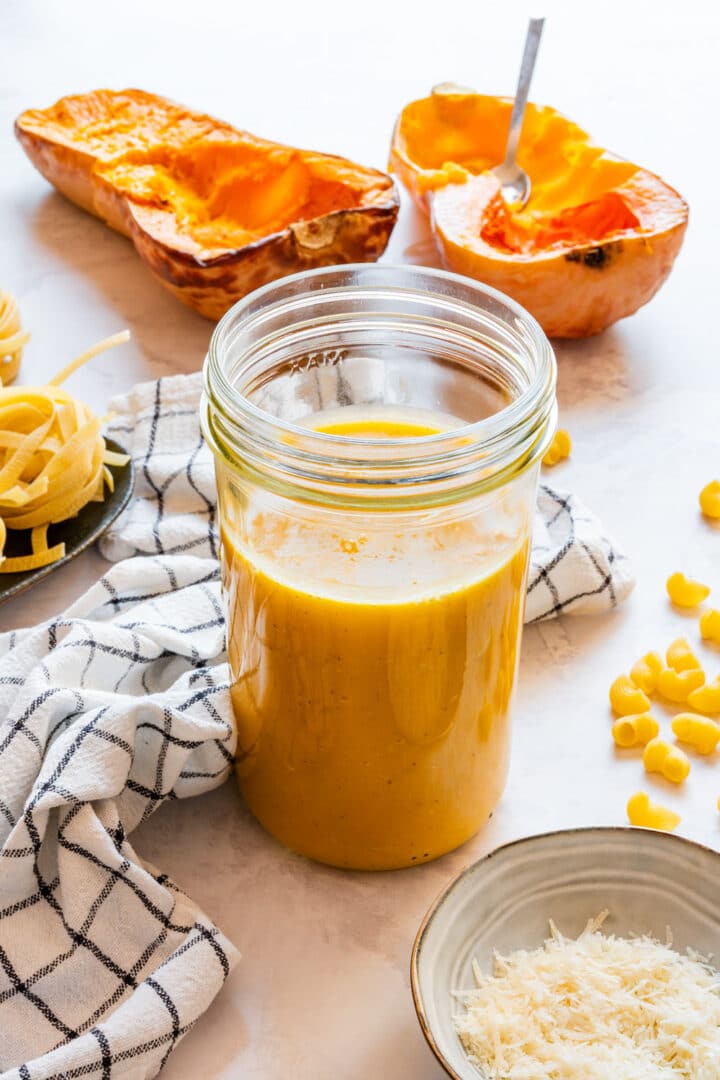
Butternut squash has a little sweetness to it, but sage and Parmesan keep this pasta sauce savory. I don’t add cream because the roasted squash already gives it the texture I want.
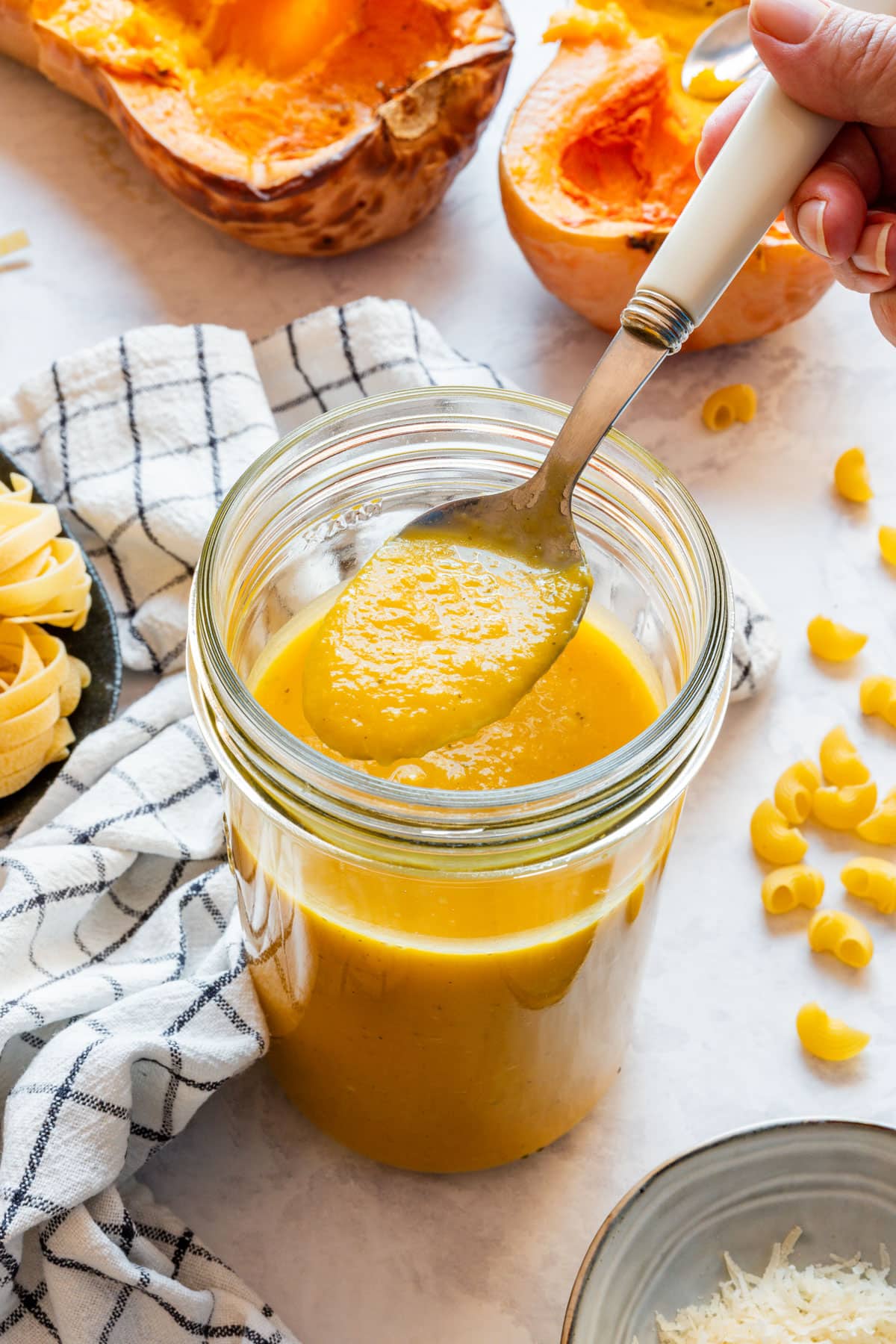
I make the sauce quite thick, then loosen it with a little pasta water when I toss it with pasta. That way I can adjust the consistency at the end without thinning the whole batch.
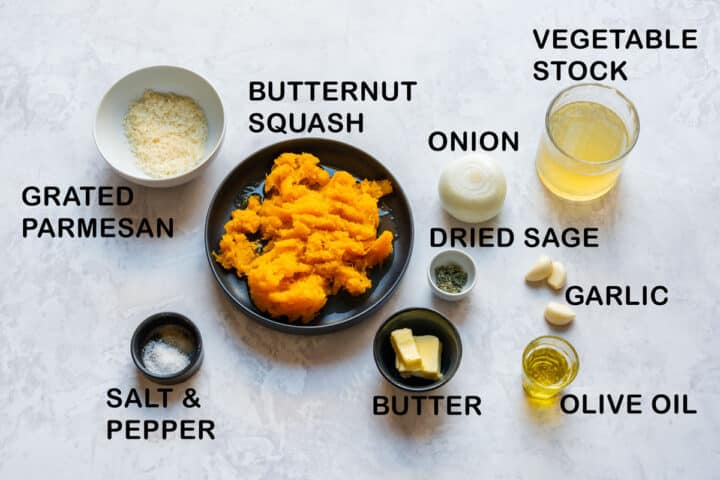
Ingredients and substitutions
Butternut squash: I used a whole squash weighing about 2 pounds (900 grams), which gave me the 2 cups of roasted flesh needed for the sauce.
Butter: Use any real butter, including homemade butter if you make your own.
Olive oil: I use it together with the butter for sautéing, but you can leave it out and use butter only if you prefer.
Onion: White or yellow onion will both work.
Garlic: I always use fresh garlic and that is what I recommend for this sauce.
Dried sage: I prefer dried sage here. I like its flavor with butternut squash and it blends smoothly into the sauce.
Vegetable stock: Store-bought or homemade vegetable stock will both work.
Parmesan: I like using Parmesan from a block and grating it myself. If you do the same, pack it into the measuring cup. Grana Padano, Pecorino or aged Asiago can also be used. Pecorino is a little saltier. If you want to keep the sauce vegetarian, check that the cheese you use is made with vegetarian rennet.
Salt and black pepper: I use homemade vegetable stock, which is quite low in sodium. I wait until the Parmesan is added, then taste the sauce and season as needed. Store-bought stock, salted butter and a saltier cheese such as Pecorino can all change how much salt you need.
How to make butternut squash pasta sauce
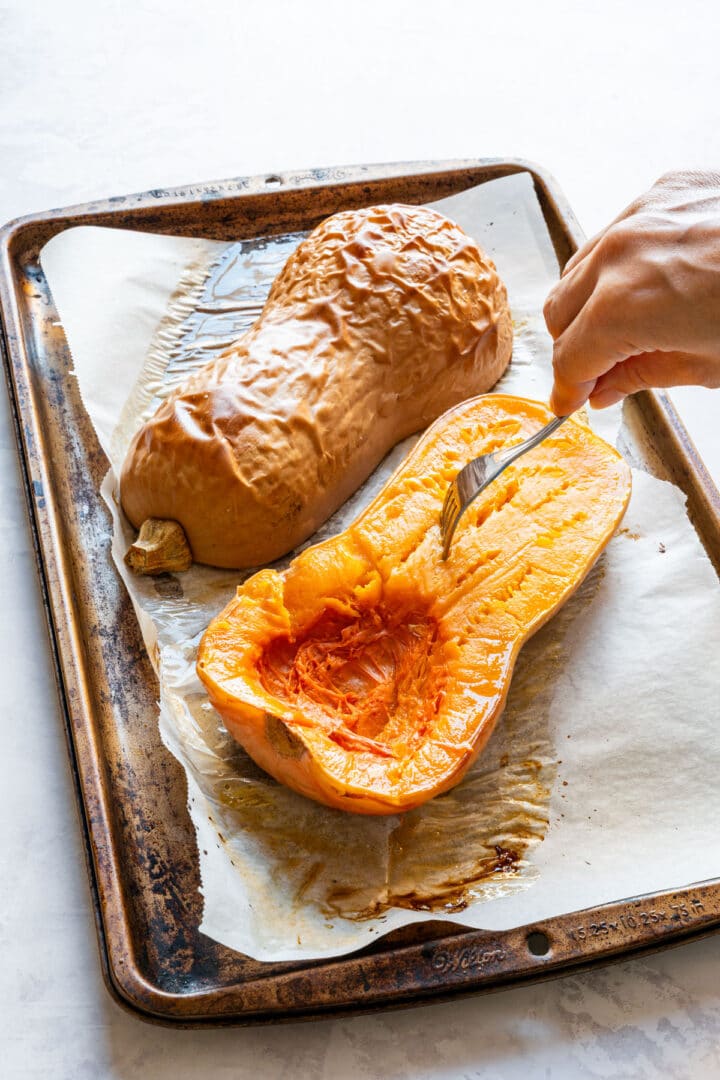
Cut the butternut squash in half and scoop out the seeds and stringy fibers. Place both halves cut-side down on a baking sheet lined with parchment paper and roast until soft.
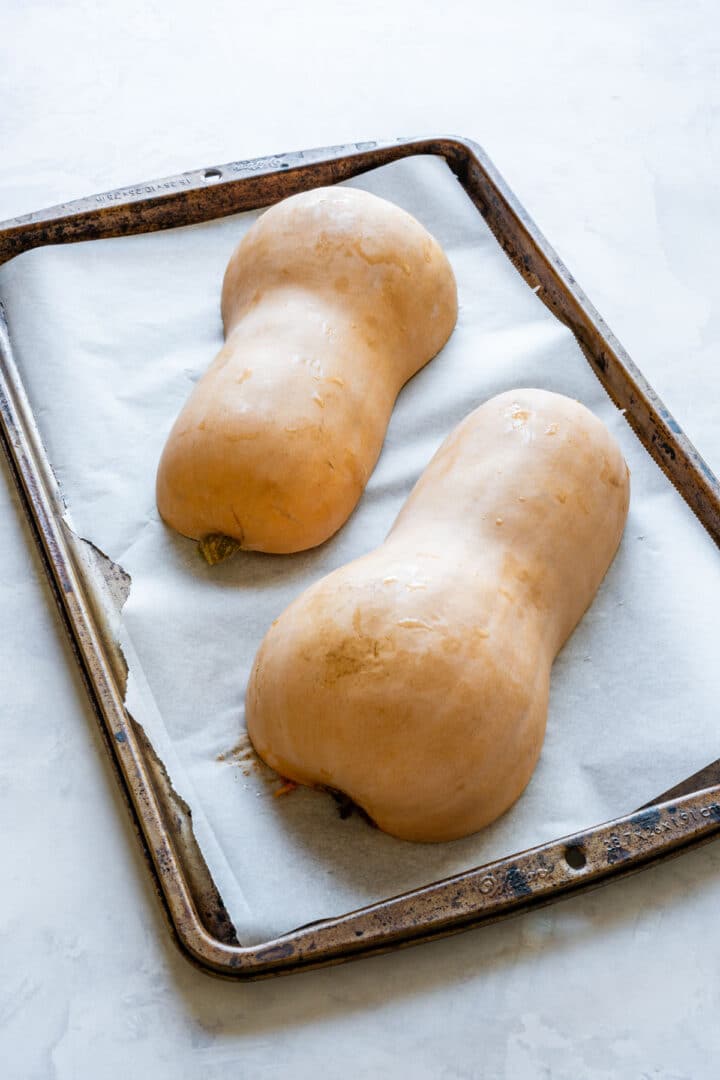
The easiest way to check the squash is to pierce it through the skin with a fork. If the fork goes through easily, it is ready. You can also carefully turn the squash over and test the flesh directly. If you find any hard areas, roast it a little longer.
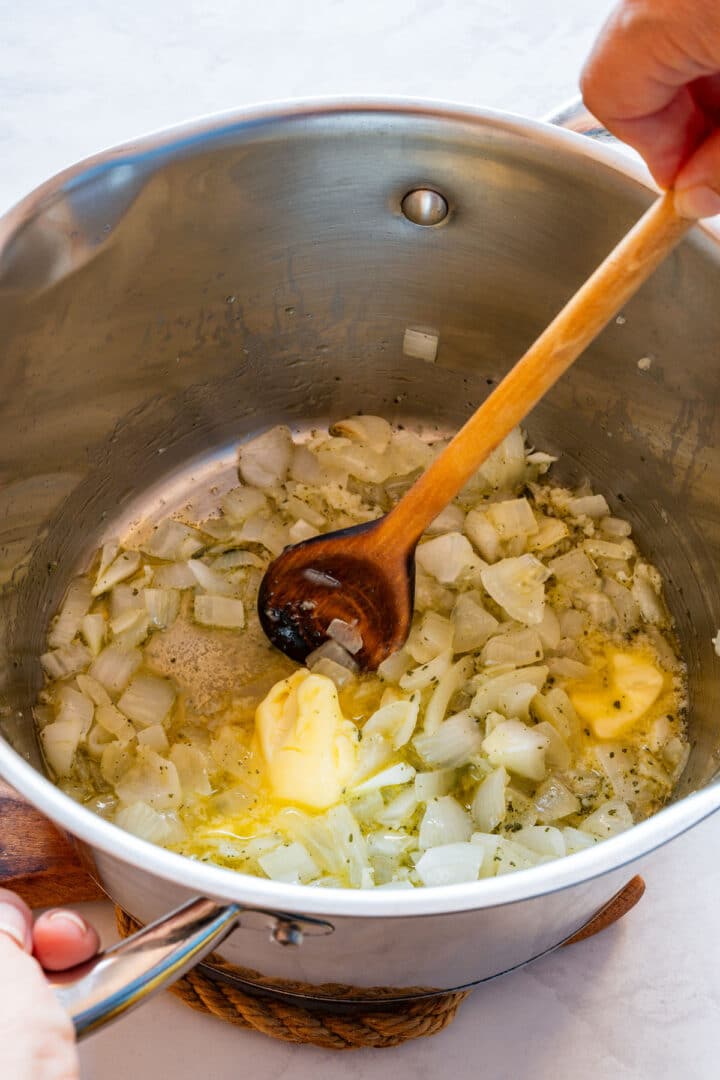
While the squash is roasting, sauté the onion, garlic and dried sage with the butter and olive oil.
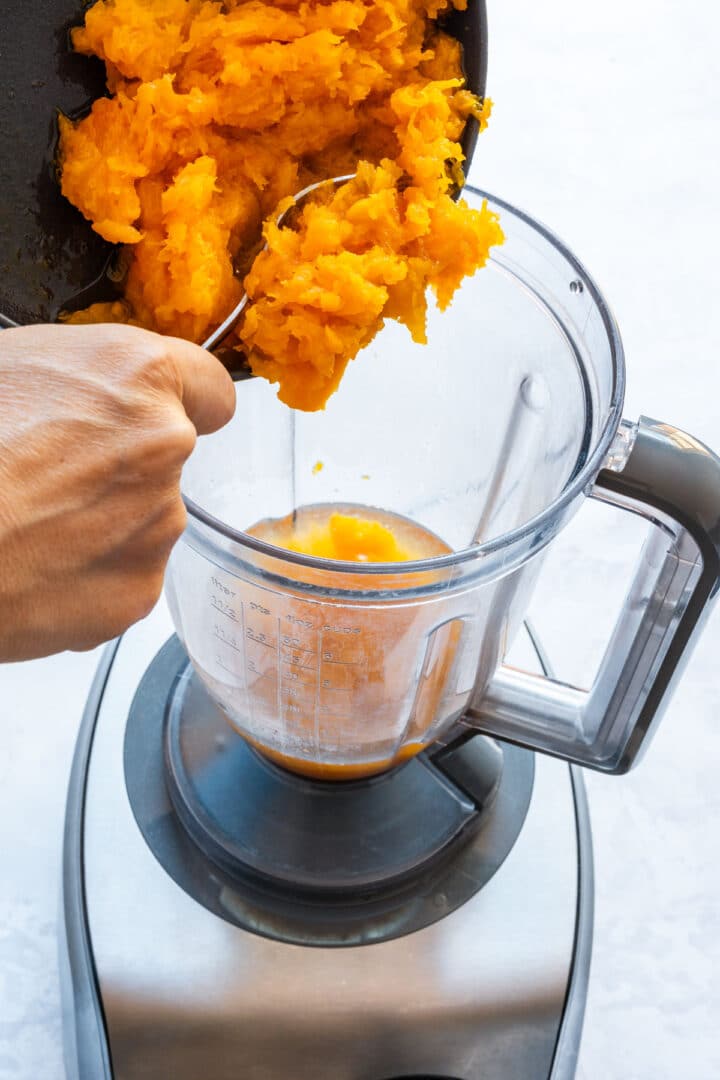
When the squash is ready and cool enough to handle, scoop out the flesh. Transfer 2 cups to a blender with the vegetable stock and sautéed onion mixture, then blend until smooth. If the sauce is thicker than you want, add a little more stock and blend again until you reach the consistency you like.
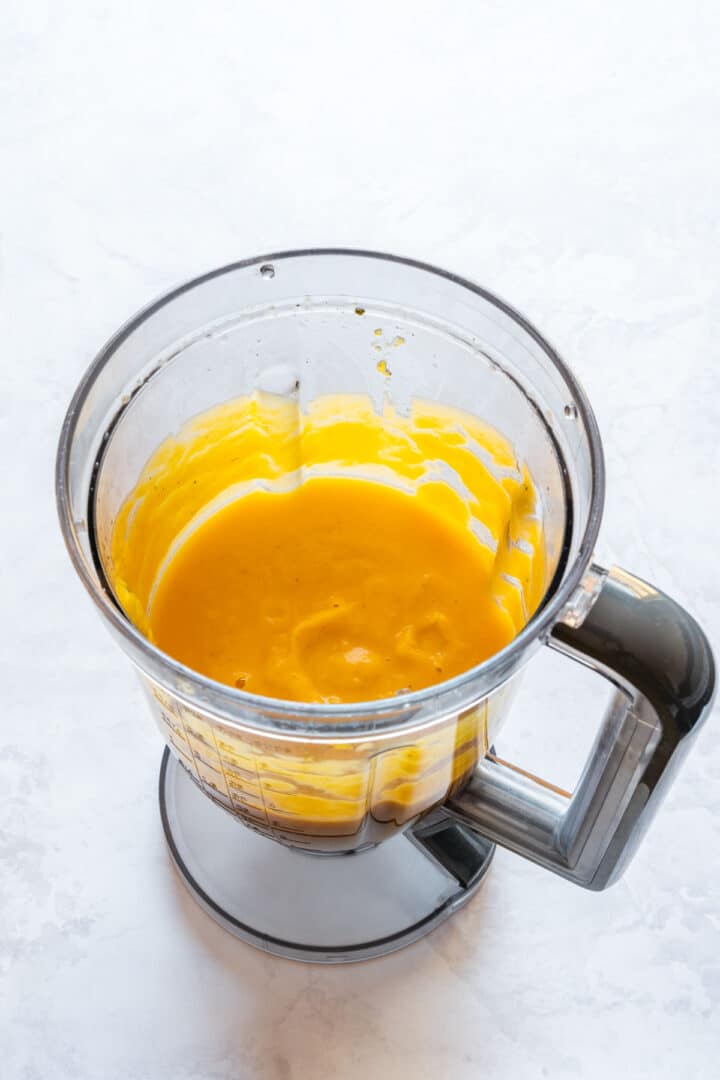
Pour the sauce into a pot and simmer on low for 3 to 4 minutes. Turn off the heat and stir in the Parmesan.
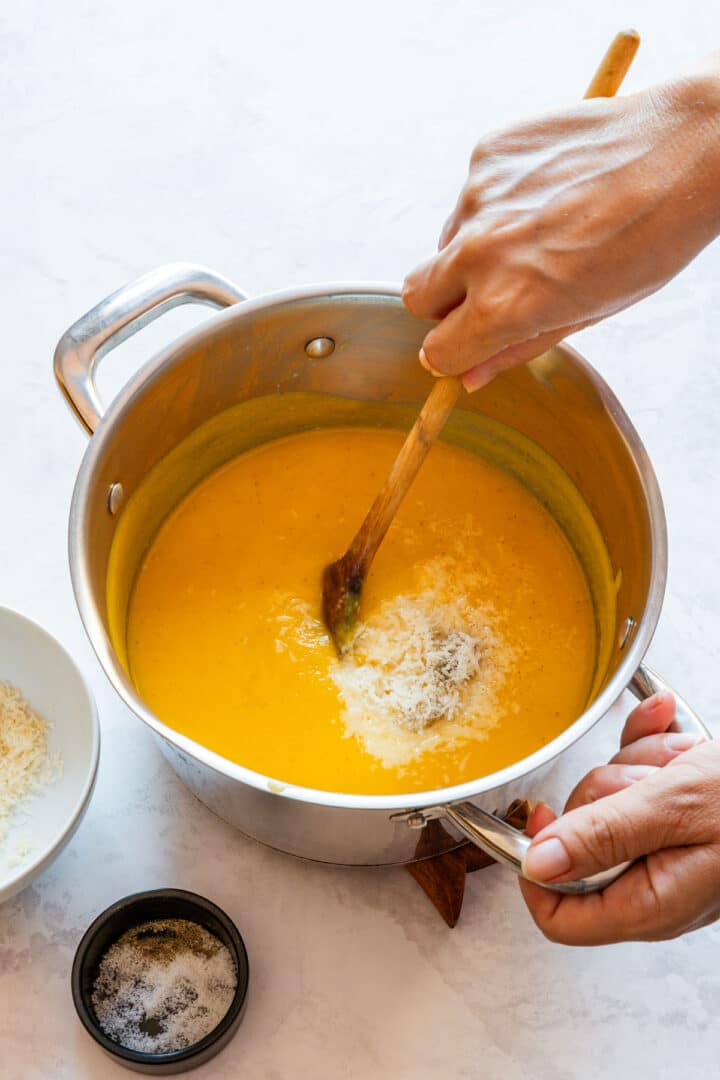
Then taste it. This is when I add the salt and black pepper.
You can also watch me make the sauce step by step in the video in the recipe card.
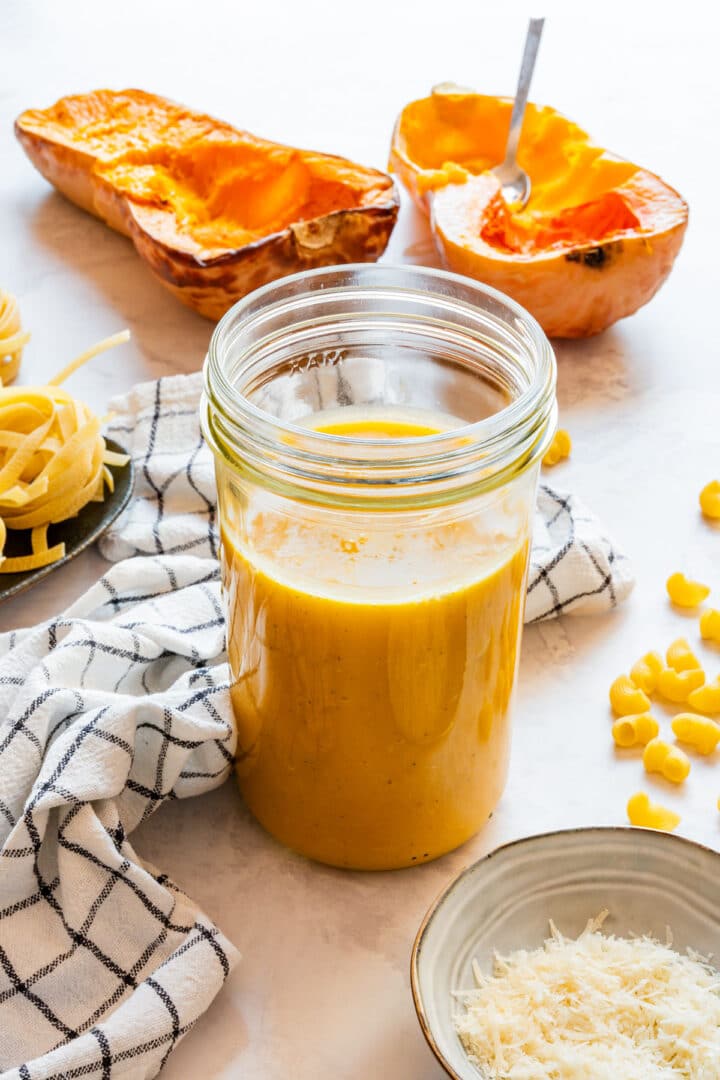
How long does it take to roast butternut squash?
At 400°F (200°C), a whole 2-pound (900-gram) squash, cut in half, should take about 45 minutes. The roasting time can vary depending on the size of the squash and your oven.
If you are using a much larger squash and one half alone weighs about 2 pounds (900 grams), allow around 60 minutes. Check the squash itself rather than relying only on the time.
Serving the sauce with pasta
I used tagliatelle in the photos, but you can use any pasta you like. If you want to make your own, my homemade pasta dough can also be cut into tagliatelle.
This recipe makes enough sauce for about 14 ounces (400 grams) of dry pasta, or 4 generous portions. I count about 3.5 ounces (100 grams) of dry pasta per adult.
Pour the sauce over the cooked pasta and toss everything together with tongs. If you need to loosen the sauce, add a little reserved pasta water and toss again until you get the consistency you like.
For a complete dinner, try butternut squash pasta with bacon and pine nuts.
Storing, freezing and reheating
Butternut squash pasta sauce can be made ahead and kept in an airtight container in the fridge for up to 3 days. The sauce thickens as it cools.
You can also freeze the sauce. I suggest freezing it without the Parmesan, so if you know you’ll freeze some, set that portion aside before stirring in the cheese. Let it cool, transfer it to a freezer-safe container and freeze. Thaw it in the fridge before reheating.
To reheat, transfer it to a saucepan or pot and heat over medium heat until warmed through. If it is too thick, add a splash of vegetable stock as needed. If you froze it without Parmesan, turn off the heat and stir in the cheese.
Helpful tips
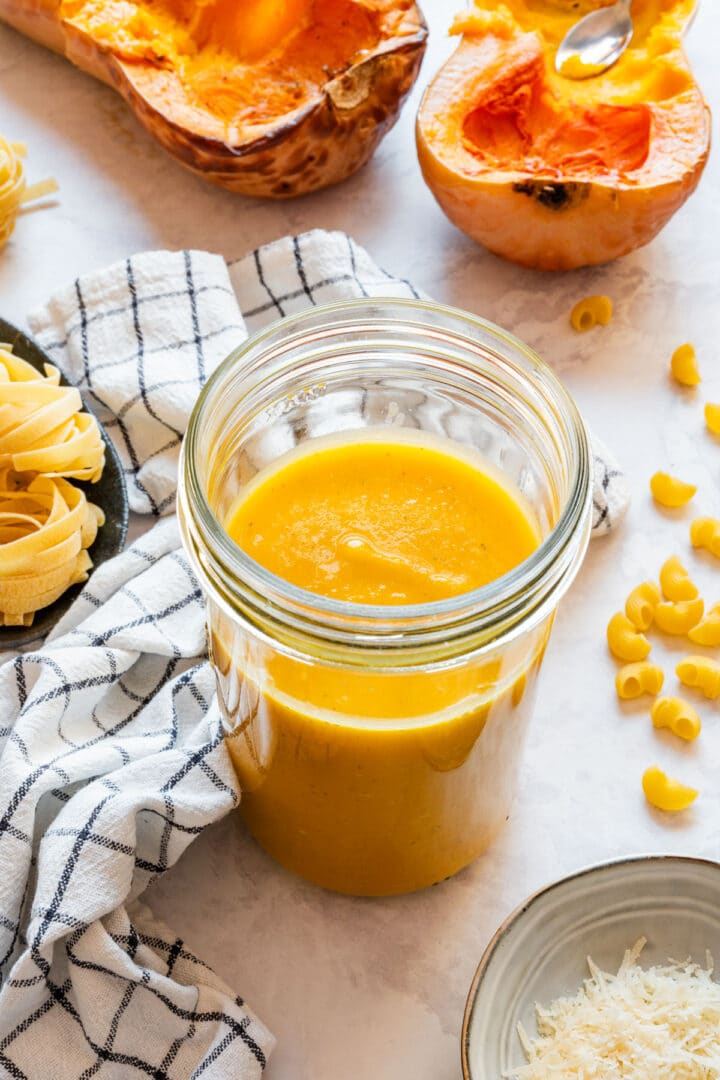
- Butternut squash can vary in moisture, so you might need a little more or less liquid than I did.
- The starch in reserved pasta water helps the sauce coat the pasta.
- My sweet potato mac and cheese is another stovetop pasta where the vegetable goes right into the sauce.
More sauce recipes
Roasted Red Pepper Sauce: Roasted red pepper and cauliflower are blended together until smooth.
Vegan Pasta Sauce: Caper berries are what make this meatless sauce different.
10-Minute Baked Bean Pasta Sauce: Baked beans make a quick sauce that is ready in about 10 minutes.
Lentil Bolognese Sauce: Lentils replace the meat in this Bolognese-style sauce.
Chanterelle Sauce: I serve this mushroom sauce with pasta, gnocchi, potatoes or meat.
Instant Pot Bolognese Sauce: A meat Bolognese made in the pressure cooker and served with pasta.
Butternut Squash Pasta Sauce
Ingredients
- 2 pounds butternut squash
- 1 tablespoon olive oil see note 1
- 1 medium onion
- 1 teaspoon dried sage
- 2 tablespoons real butter
- 3 cloves garlic pressed
- 1 cup vegetable stock
- ¼ cup Parmesan finely grated, see note 3
- salt to taste, see note 4
- black pepper to taste
Instructions
- Preheat the oven to 400°F (200°C). Cut the butternut squash in half and scoop out the seeds and stringy fibers.
- Place the squash cut-side down on a baking sheet lined with parchment paper.
- Roast for about 45 minutes, or until soft. The easiest way to check it is to pierce the squash through the skin with a fork. If the fork goes through easily, it is ready. You can also carefully turn it over and test the flesh directly. If you find any hard areas, roast it a little longer.
- Meanwhile, heat the olive oil in a skillet or medium pot. Add the onion, dried sage, butter and pressed garlic. Sauté over medium heat, stirring regularly, until the onion is translucent, about 3 to 4 minutes. Turn off the heat.
- When the squash is ready, let it cool slightly. Scoop out the flesh and transfer 2 cups to a blender. Add the vegetable stock and sautéed onion mixture. Blend until smooth.
- If the sauce is thicker than you want, add a little more vegetable stock and blend again until you reach the consistency you like.
- Pour the sauce into a pot and simmer over low heat for 3 to 4 minutes. Turn off the heat and stir in the Parmesan.
- Taste the sauce after adding the Parmesan, then season with salt and black pepper as needed.
Video
Notes
- Olive oil: You can leave it out and use butter only for sautéing if you prefer.
- Butter: Use real butter rather than a butter substitute.
- Parmesan: I like using Parmesan from a block and grating it myself. If you do the same, pack it into the measuring cup. Grana Padano, Pecorino or aged Asiago can also be used. Pecorino is a little saltier. If you want to keep the sauce vegetarian, check that the cheese you use is made with vegetarian rennet.
- Seasoning: The amount of salt you need will depend on your stock, whether the butter is salted or unsalted and the cheese you use. My homemade vegetable stock is quite low in sodium.
- Roasting time: A whole 2-pound (900-gram) squash, cut in half, should take about 45 minutes. If one half alone weighs about 2 pounds (900 grams), allow around 60 minutes.
- Pasta: This sauce is enough for about 14 ounces (400 grams) of dry pasta. I count about 3.5 ounces (100 grams) per adult, which gives 4 generous portions.
- Storage: Keep the sauce in an airtight container in the fridge for up to 3 days. It thickens as it cools, so reheat it in a saucepan or pot with a splash of vegetable stock if needed. To freeze, leave out the Parmesan, or set aside the portion you want to freeze before adding it. Thaw in the fridge, reheat, then turn off the heat and stir in the Parmesan.
Nutrition
Nutrition information is an estimate provided by an online nutrition calculator and may vary based on ingredient brands, substitutions, and portion sizes.
As this looks like a great recipe for the vegetarians in our family when they visit, please can you tell me if I can freeze the sauce.
Many thanks
Hi Joan. Yes, you can freeze it. I suggest to freeze it without the Parmesan and add it to the thawed and reheated sauce. Hope this helps.