
Simple Vegetable Stock (Two Ways)
This post may contain affiliate links. Please read our disclosure policy.
Homemade vegetable stock makes everything taste better. Use it to add flavor to soups, stews, rice dishes and pasta sauces. It’s also a great way to use up leftover vegetables from the fridge.
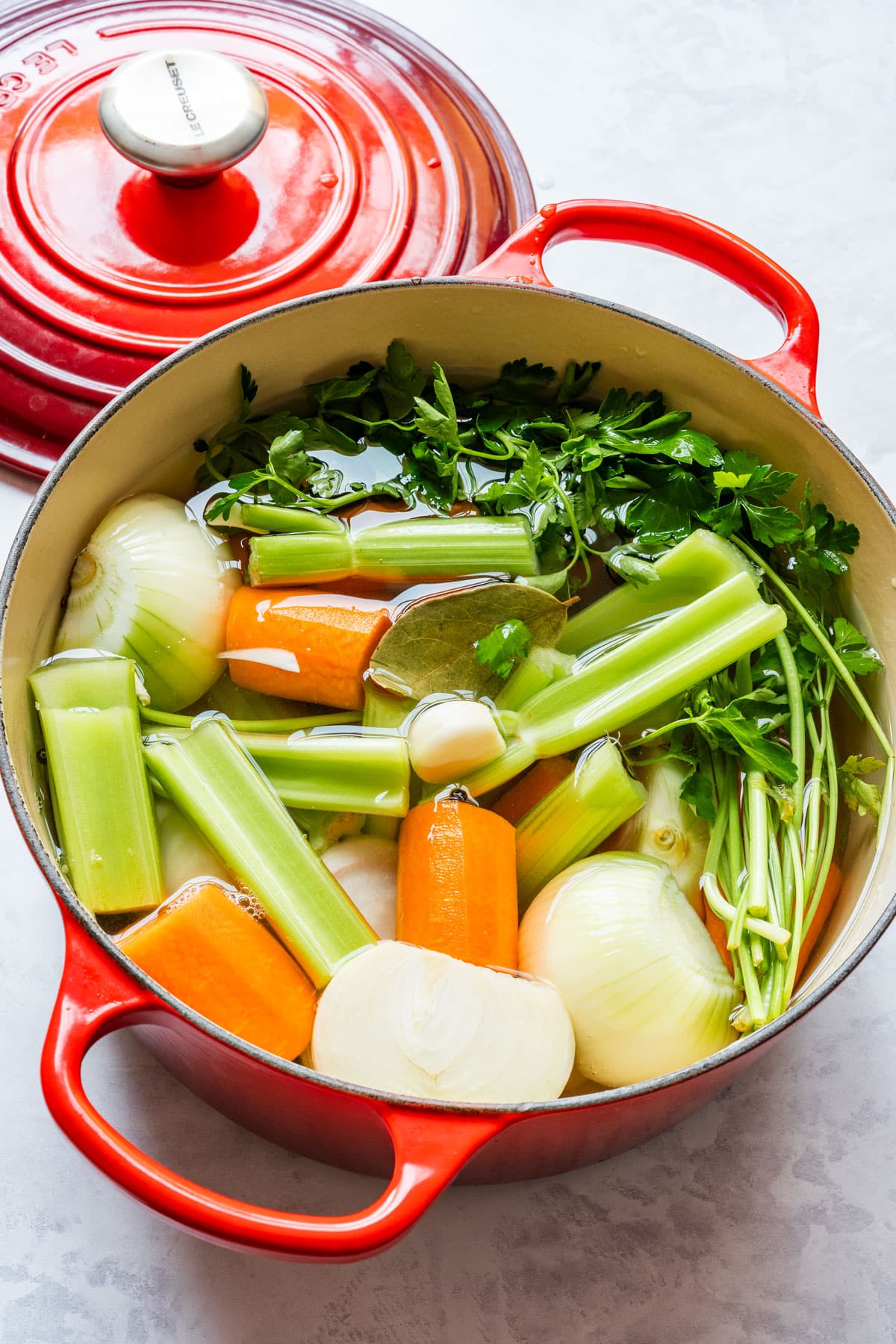
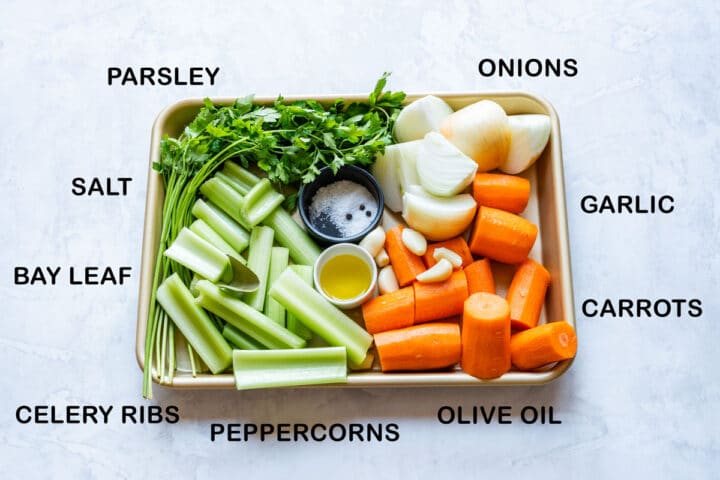
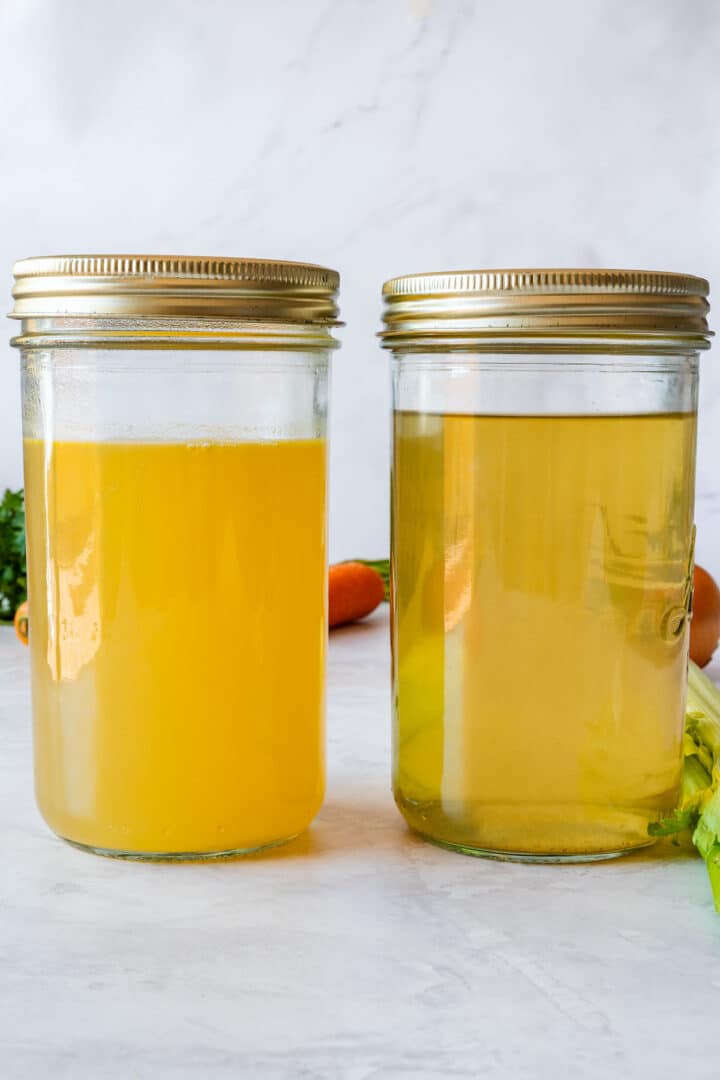
In this post, I’m sharing vegetable stock two ways:
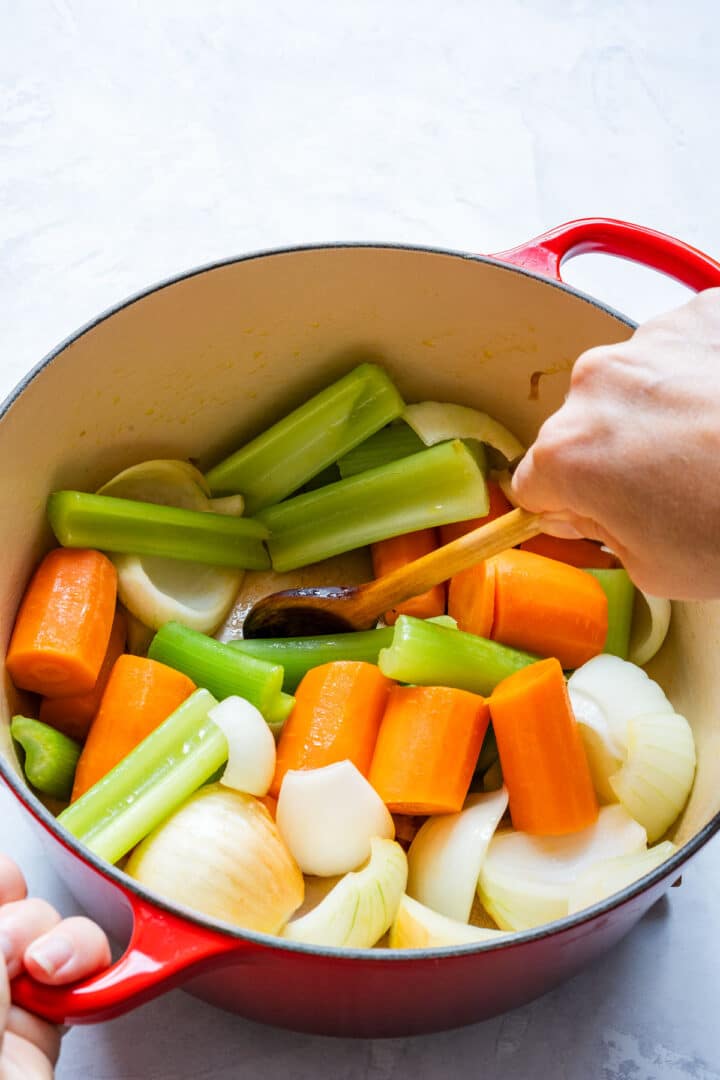
Stock with sautéed vegetables
Sauté all the vegetables first (about 5 to 10 minutes). Keep an eye on them so they don’t burn. Add salt, black peppercorns, bay leaf and parsley, then pour in water. Bring to a simmer and cook covered.
This method gives you a deeper color and a slightly cloudy stock.
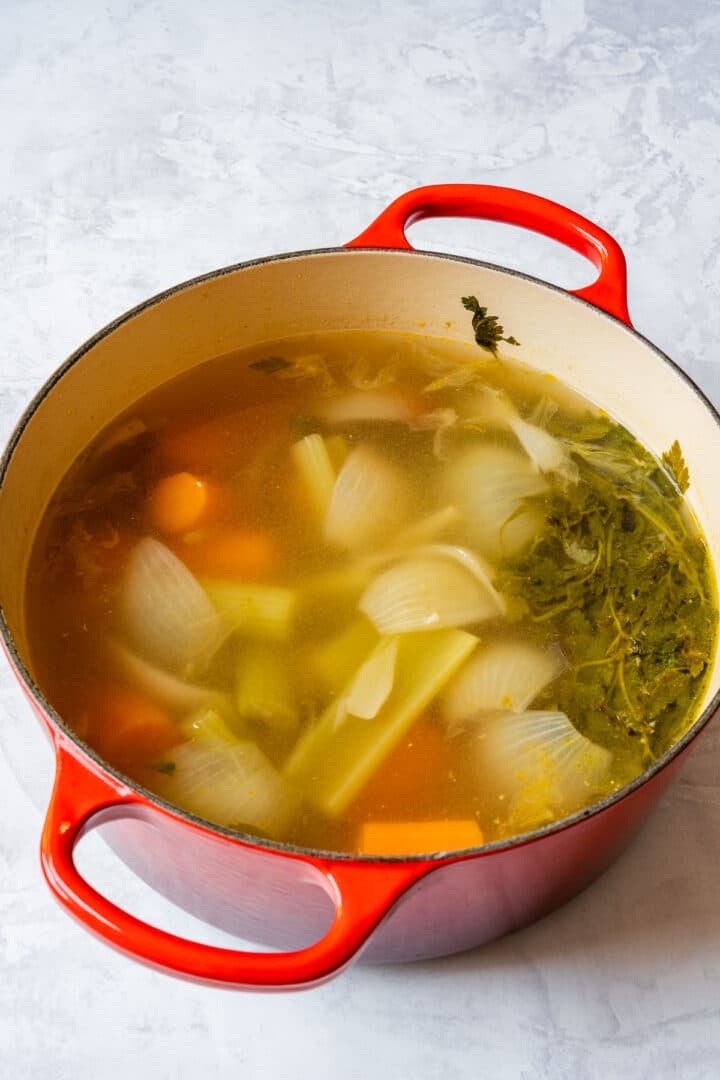
Stock without sautéing
A slightly quicker option that gives you a clearer, lighter stock. It’s a good choice when you don’t want to go the extra mile and prefer saving time. It’s also lighter in color, but if you leave onion skins on, it will turn darker.
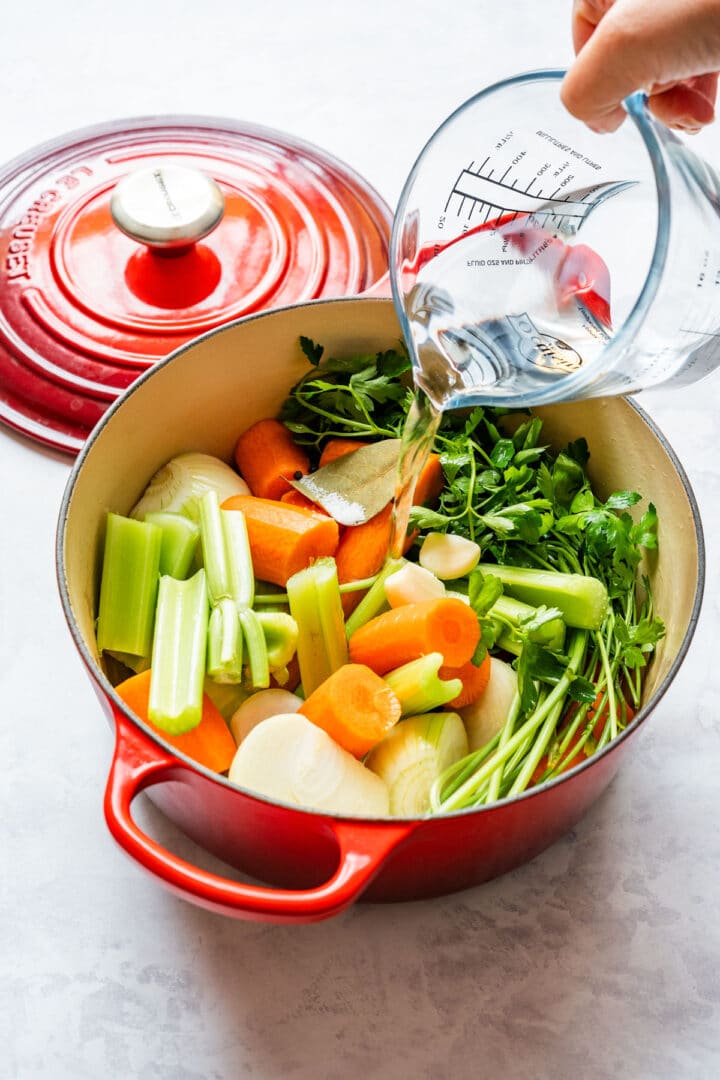
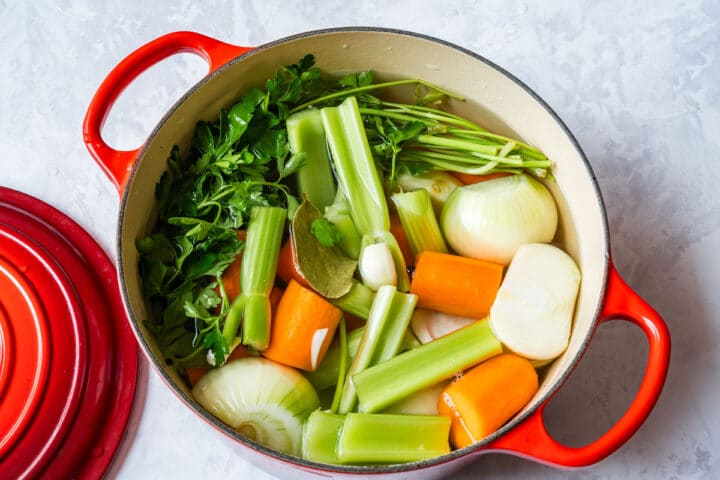
All you do is cut the vegetables into chunks, add seasoning and parsley and pour in water. Then simmer, again with the lid on.
Choose sautéed vegetables for deeper flavor and color. Choose no-sauté for a lighter, clearer stock.
Can I use scraps and peels to make the broth?
Yes, you can and many people do. I don’t and here are the reasons why:
- Most of my scraps are cut-offs of veggies I don’t want to eat or they are dirty. And I don’t want my family to eat them either. If yours are clean and you don’t mind, then by all means use the scraps. Just rinse them well.
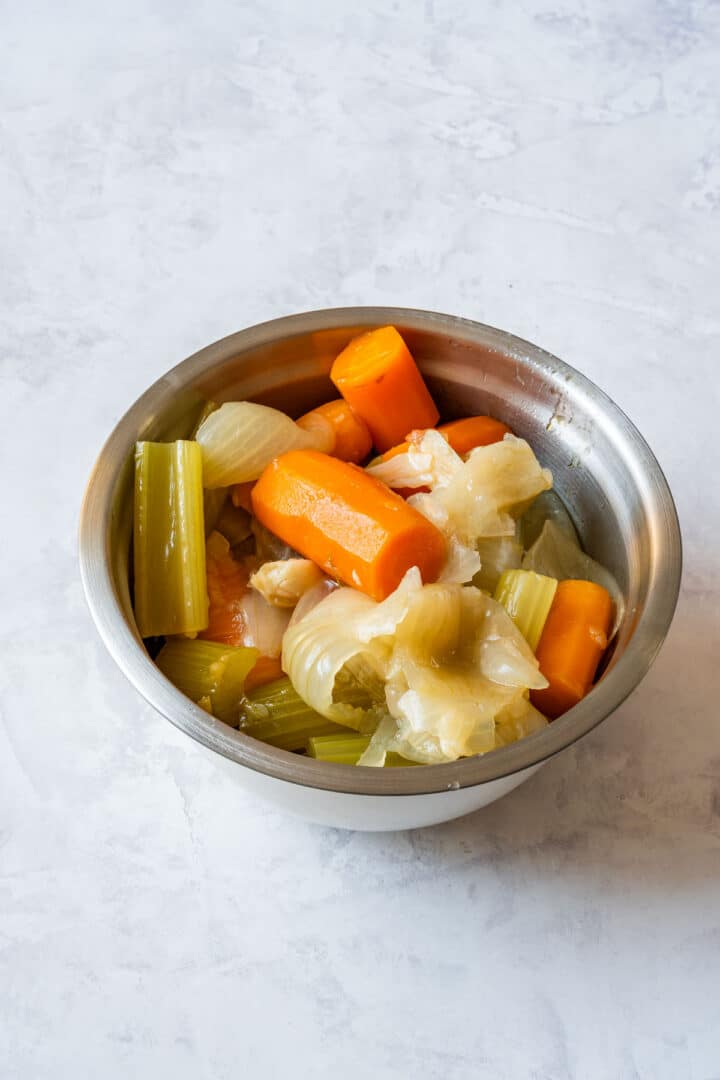
- When the stock is ready, I puree most of the veggies in a blender and freeze them in small portions for later use. My kid does not want to eat vegetables, so I often add a portion (or two) to chicken noodle soup or other sauces, where this blends nicely in without overpowering other flavors. It’s like a homemade, cooked bouillon. I also add a few “frozen veggie cubes” to various sauces for pasta, like Bolognese sauce.

Storage
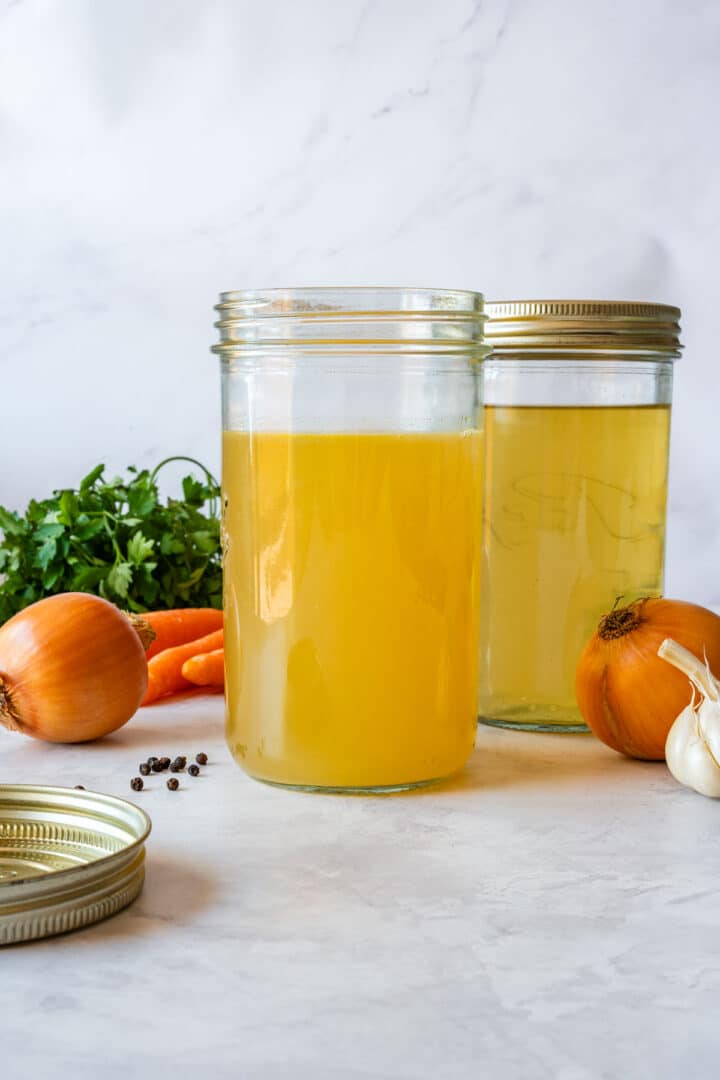
Vegetable stock will keep up to 4 days in the fridge. Keep it in a glass jar, sealed container or pot covered with a lid.
Or freeze it in freezer-friendly containers for up to 3 months. For smaller portions, fill ice cube trays and add to sauces or whenever you need them.
Recipe FAQ
You can use it in dishes that call for water or stock/broth.
Sauces: to thin a sauce or deglaze a pan.
Rice dishes: Italian risotto or Spanish paella.
Soups or stews: I often use it when making vegetable soup or minestrone soup.
Grains: anything you are cooking that requires a liquid.
While you can use various types of veggies, avoid cauliflower, broccoli or cabbage. They can add bitterness.
I also avoid using bell peppers in this recipe but often add a little when I make chicken stock from scratch.
I use 1 teaspoon per 1 quart (1 liter) of water (4 cups). For a low-sodium stock, use ½ teaspoon or skip the salt.
More homemade stock recipes
- Fish Stock: Made in the Instant Pot (pressure cooker), but you can simmer it on the stove as well.
- Instant Pot Turkey Stock: A great way to use up leftover turkey bones and turn them into a flavorful stock for soups, gravies and risotto.
- Instant Pot Chicken Stock: For a stovetop version, simmer it for 2 hours.
Simple Vegetable Stock (Two Ways)
Ingredients
- 1 tablespoon olive oil see note 1
- 3 large onions peeled and quartered, see note 2
- 4 large carrots peeled and cut into chunks
- 6 large celery ribs (stems), cut into chunks, see note 3
- 6 cloves garlic peeled
- 1 bay leaf
- 10 black peppercorns
- 1 teaspoon salt optional, see note 4
- 8 cups water 2 quarts
- fresh parsley a bunch, see note 5
Instructions
Option 1: Stock with sautéed vegetables
- In a medium pot or Dutch oven (at least 4 quarts/4 liters), heat 1 tablespoon olive oil over medium to medium-low heat.
- Add 3 large onions (peeled, quartered), 4 large carrots (peeled, cut into chunks), 6 celery ribs (cut into chunks), and 6 garlic cloves.
- Sauté for about 10 minutes, stirring occasionally, until the vegetables soften and pick up a little color.
- Add 1 bay leaf, 10 black peppercorns, 1 teaspoon salt (optional), 8 cups water (about 2 liters), and a bunch of fresh parsley.
Option 2: Stock without sautéing
- Add everything to a medium pot or Dutch oven (at least 4 quarts/4 liters): 3 large onions (peeled, quartered), 4 large carrots (peeled, cut into chunks), 6 celery stalks (cut into chunks), 6 garlic cloves, 1 bay leaf, 10 black peppercorns, 1 teaspoon salt (optional), 8 cups water (about 2 liters), and a bunch of fresh parsley.
Both options
- Cover with a lid and bring to a gentle simmer. Reduce heat to low and simmer covered for 40 minutes.
- Strain the stock through a fine-mesh sieve into a bowl or pot. Save the vegetables if you plan to puree and freeze them (see note 2).
Cooling
- An ice bath works best: place the container in a larger bowl or sink filled with ice and cold water and stir occasionally until cooled, then refrigerate.
Notes
- Use olive oil only if you are sauteing the vegetables.
- I peel all my vegetables because after I strain them, I puree them (leave out the peppercorns), freeze in individual portions and use later to thicken soups and sauces, add extra veggies or boost flavor. You can leave peels on, (onion skins will darken the stock), just rinse everything well and remove any dirt.
- Celery leaves are great for stock too.
- Salt is optional. If you want to keep it low-sodium, leave it out and season later. If you like to add more salt, increase to 1 teaspoon per 4 cups (1 liter) of water.
- General guideline: Use at least 1 pound (500 grams) of vegetables per 4 cups (1 liter) of water.
- Skipping the sauté saves about 10 minutes.
- Fresh parsley is one of the best herbs to flavor a stock or broth. Add a good handful or as much as you like.
- Storage: Refrigerate up to 4 days (Use glass jars, pot covered with a lid or plastic containers) or in the freezer up to 3 months (Use freezer-friendly containers).
- Use: Soups, stews, rice dishes, pasta sauces or other vegetable sauces, …
Nutrition
Nutrition information is an estimate provided by an online nutrition calculator and may vary based on ingredient brands, substitutions, and portion sizes.