
Homemade Lemon Curd
This post may contain affiliate links. Please read our disclosure policy.
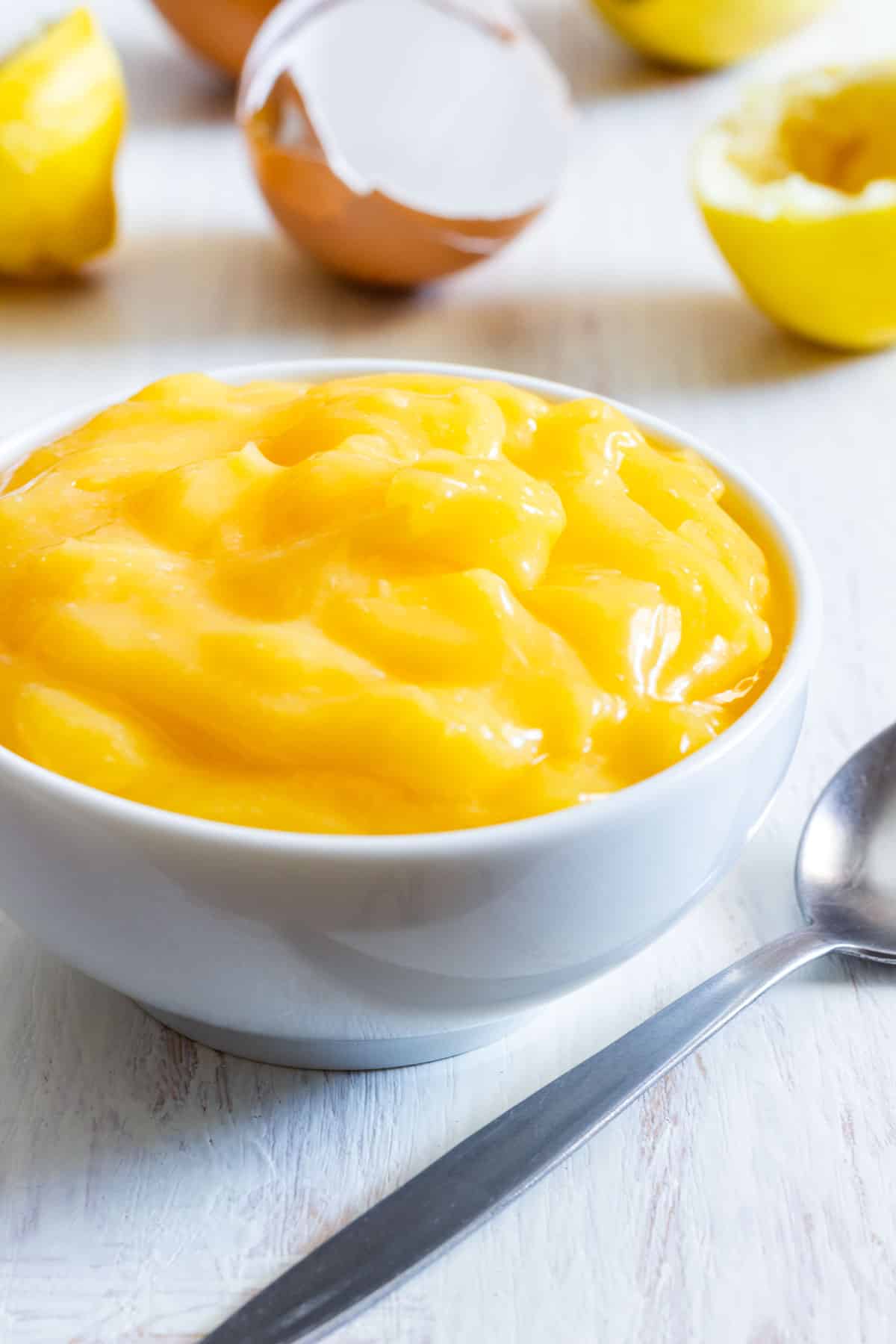
An easy recipe for lemon curd lovers. Using whole eggs keeps things simple, and a double boiler gives you gentle heat, so the mixture thickens slowly without scrambling.
The result is smooth, bright and zesty.
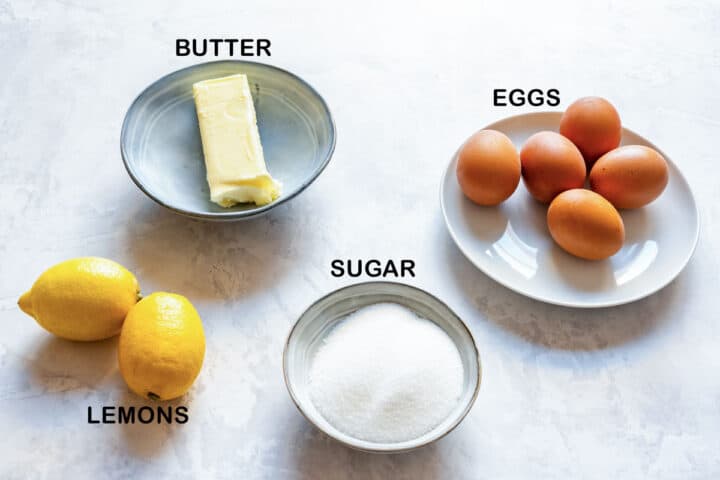
This recipe calls for four simple pantry ingredients: eggs, butter, sugar and lemon juice.
Tools you’ll need
- Double boiler: Or a saucepan with a heatproof bowl that fits securely on top (the bowl should not touch the water).
- Whisk: A silicone spatula or wooden spoon also works for stirring.
- Glass jars & lids: I recommend sterilizing them if you don’t plan on using the curd within a few days.
- Fine-mesh strainer: Optional, for an extra-smooth texture.
How to make lemon curd
- Keep the water at a bare simmer so the eggs don’t scramble.
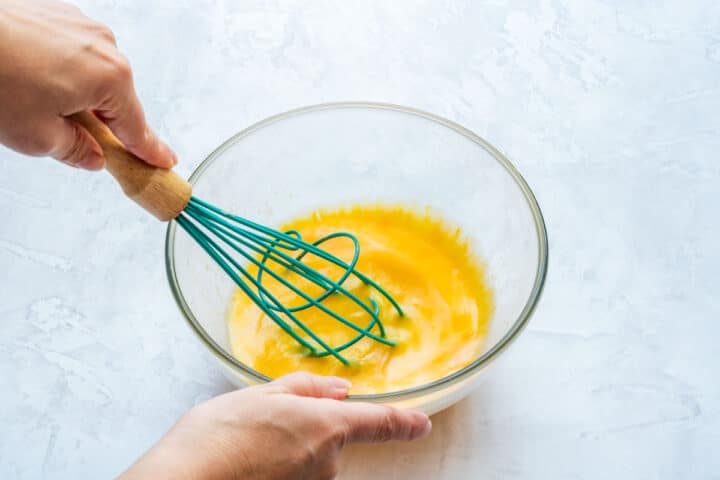
- Whisk constantly once the bowl is over the heat.
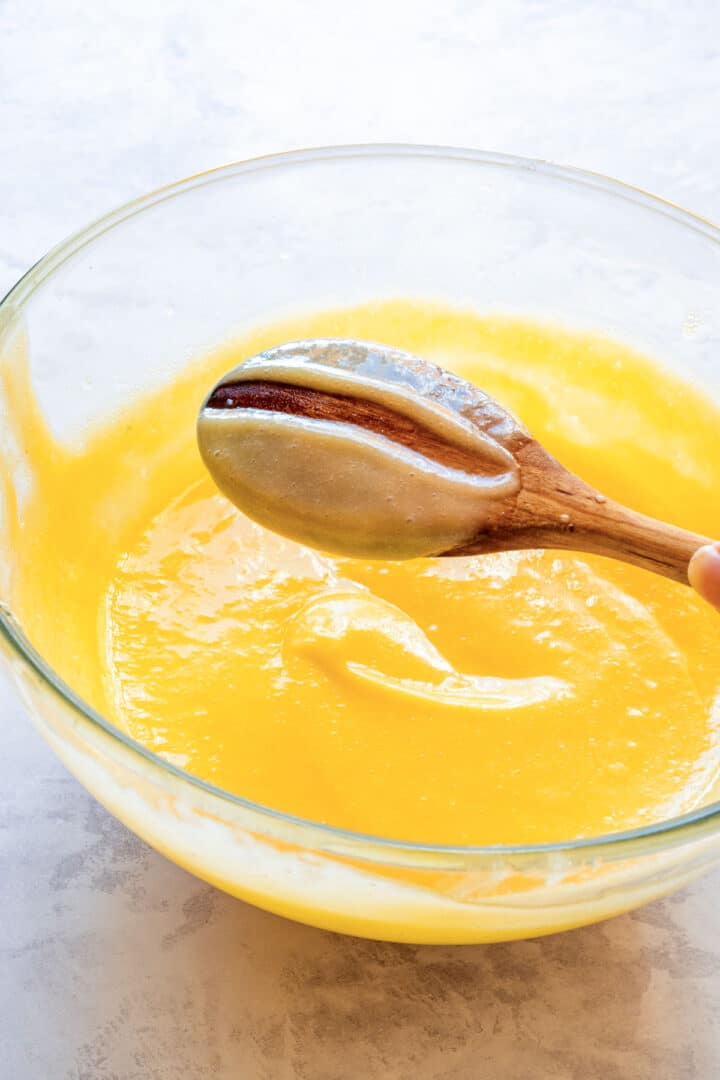
- It’s ready when it coats the back of a spoon and holds a clean swipe.
- Strain if you see tiny bits.
- Cover the surface and chill until thick.
Serving ideas
- Desserts: Drizzle it over pavlova cake, layer it into mini dessert cups, use it as a filling for lemon cupcakes, or spoon it into the centers of lemon thumbprint cookies.
- Toast: My favorite quick sweet treat.
- Pancakes or waffles: It’s a delicious topping for German pancakes, especially when paired with berries or chocolate sauce.
- Yogurt: Swirl it into plain yogurt and top with granola or berries.
Storage and freezing
When stored properly in clean, sealed jars (I recommend sterilizing them too), homemade lemon curd should last up to 2 weeks in the fridge, or up to 6 months in the freezer. Once thawed, keep it in the fridge and use within 2 weeks (for best texture, use sooner).
Store lemon curd in small, clean glass jars with tight-fitting lids. Open only what you plan to use and always use a clean spoon to avoid introducing crumbs or moisture.
Freeze in freezer-safe jars and leave headspace so the curd has room to expand. Leave about 1 inch at the top or if the jar has a narrow neck, fill only up to where the neck starts.
Helpful tips
- This recipe calls for real unsalted butter. Avoid using butter substitutes and make sure to use a fresh stick of butter.
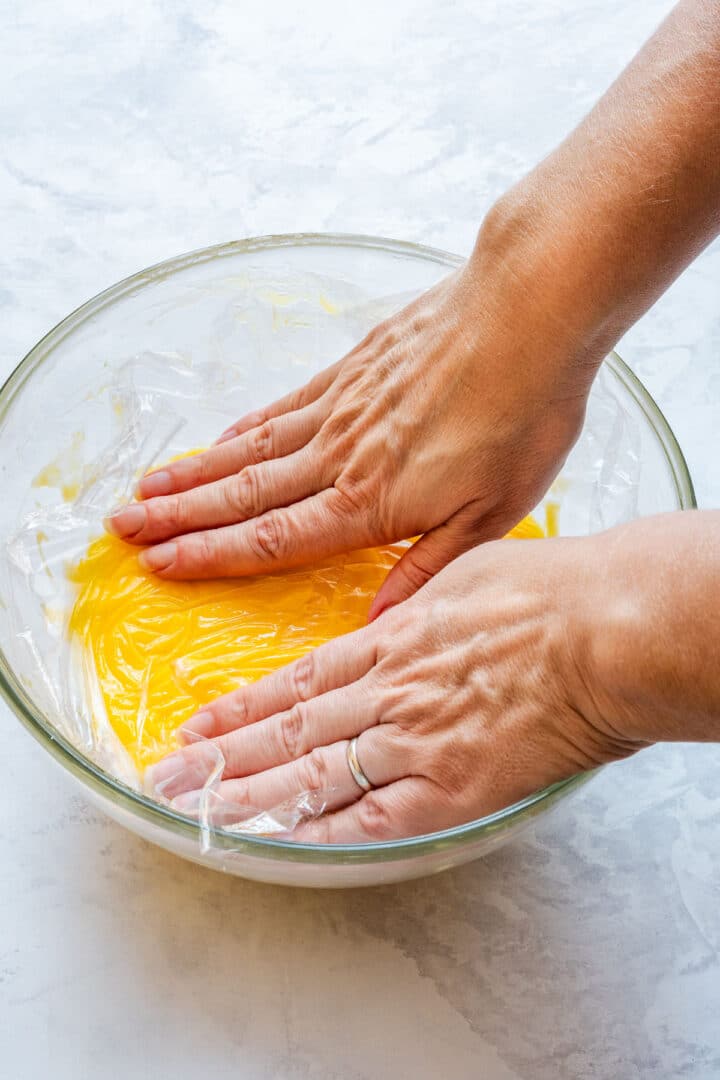
- To prevent a skin from forming as it cools, place plastic wrap directly onto the surface.
- You will get about 14 ounces (400 g) of lemon curd out of this recipe. So, to store it, you can use one 16-ounce jar, two 8-ounce jars or four 4-ounce jars. If you have a choice, go with the smaller jars so you’ll only open what you use. Any extra can be frozen for later.
- I am using superfine sugar (caster sugar) as it dissolves faster. If you don’t have it on hand, you can run regular granulated sugar through a food processor to make it finer. Don’t use powdered, confectioner’s or icing sugar.
Lemon curd FAQ
Yes. Use a saucepan and a heatproof bowl set over gently simmering water. Make sure the bowl doesn’t touch the water, keep the heat low and whisk constantly.
Yes, you can. Keep in mind that lemon curd made with bottled lemon juice can taste slightly bitter and the lemon flavor can feel a bit flat. For a brighter flavor, I recommend using fresh lemons.
It takes time. You need to stir the mixture over low heat until it starts setting. You should see a significant difference after about 10 minutes. Once it coats the back of your spoon nicely, turn off the heat. It will continue to thicken as it cools.
When you make it with whole eggs, the whites can sometimes leave tiny bits in the curd. This usually happens if the heat is a little too high or if the curd is not whisked constantly. For the smoothest texture, strain the warm curd through a fine-mesh strainer before it cools. If a few tiny bits don’t bother you, you can skip it. I usually leave mine as is, but it’s completely a personal preference.
Yes, you can. Other possible options are grapefruit or oranges.

More citrus desserts
- Lemon Tart: A tasty citrus dessert with easy prep.
- Lemon Posset: A 3-ingredient dessert in a cup, perfect for a special occasion.
- Lemon Blueberry Poke Cake: Made with ricotta frosting, it’s a favorite sweet treat.

Lemon Curd with Whole Eggs
Ingredients
- 5 large eggs
- 6 tablespoons lemon juice freshly squeezed, see note 2
- ½ cup superfine sugar see note 3
- 1 stick unsalted butter see note 4
Instructions
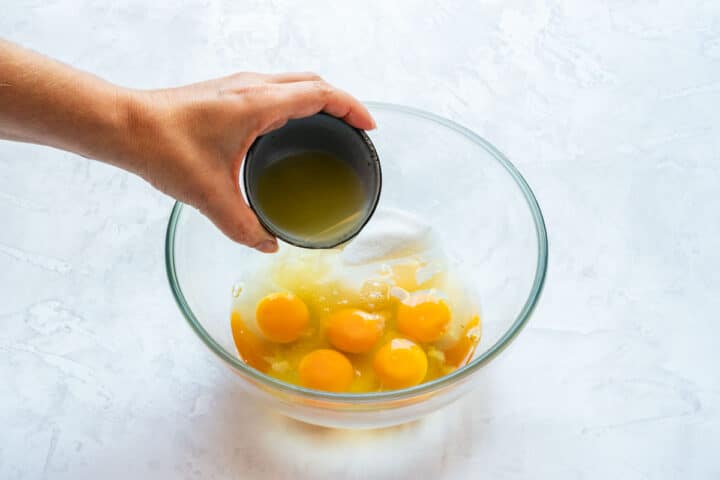
- In a medium heatproof bowl, whisk 5 large eggs, 6 tablespoons lemon juice and ½ cup superfine sugar until combined.
- Set the bowl over a pot of gently simmering water (the bowl should not touch the water). Keep the water at a bare simmer, not a boil. Add the 1 stick unsalted butter and whisk/stir constantly until thickened, about 10 minutes.
- Take it off the heat. For the smoothest texture, strain while warm. Press plastic wrap directly onto the surface of the curd, cool slightly (ice water bath is great option), then transfer to the fridge.
- Once fully chilled, transfer to jars.
- Store in the fridge or freezer.
Notes
- Makes about 14 ounces (400 g).
- This recipe calls for juice from fresh lemons. You will need about 2 medium lemons to get this amount of juice.
- Superfine sugar is finer than regular granulated sugar. If you don’t have it, you can blitz granulated sugar in a food processor to make it finer. Don’t use powdered or confectioners’ sugar.
- Use only real butter. Don’t use any butter substitutes.
- Storage: When stored properly in sealed jars, homemade lemon curd can last up to 2 weeks in the fridge or 6 months in the freezer. To thaw, transfer it to a fridge for 24 hours, then use as needed.
- Jars: You can use one 16-ounce jar, two 8-ounce jars or four 4-ounce jars.
Nutrition
Nutrition information is an estimate provided by an online nutrition calculator and may vary based on ingredient brands, substitutions, and portion sizes.
Want more recipes like this one?
Tell Google you’d like to see more of our recipes.

So easy. So yummy. I did not have castor sugar. Granulated worked fine. The second time I made it I increased the lemon to 8 tablespoons. The trick is to make sure the eggs, lemon, and sugar are very well wished before you put it in the double boiler. I will be making this again and again.
Thanks so much for your comment, Lauren K!
How long can lemon curd keep in the fridge?
Hi. Lemon curd can be stored in the fridge (in a closed jar) for a few weeks (I wouldn’t go over 3 weeks) but I always finish a jar within a few days :).